

Integrated Digital Marketing: Syncing SEO, PPC, and Email for Maximum Reach
In today’s crowded online space, no single channel wins alone. Businesses need a digital marketing strategy that pulls together SEO, PPC, and email marketing. This integrated marketing approach maximises reach by feeding leads from one channel to the next.
Think of it as a relay race: SEO brings in organic traffic, PPC grabs quick wins, and email keeps people coming back.
Why focus here? Multi-channel ROI jumps when these tools work in sync. A study from Google shows integrated campaigns can lift conversions by 25%. For real estate agents or logistics firms, like ones I’ve worked with in Dubai, tying these channels means more site visits, qualified leads, and steady sales.
What Makes SEO the Foundation of Your Strategy
SEO builds long-term search engine visibility. It’s about getting found when people search for terms like “Dubai apartments for rent” or “fast logistics Pakistan.”
Start with keyword research. Tools like Google Keyword Planner reveal what your audience types. Target primary keywords like digital marketing strategy alongside niche ones for your industry.
On-page tweaks matter: Update titles, meta descriptions, and headers. For a real estate site, a page on “luxury villas in Jumeirah” should rank for related searches.
Off-page? Build backlinks from industry sites. Guest posts on logistics blogs or real estate forums drive authority.
Results take time, 3-6 months typically, but they stick. Track with Google Analytics: Organic traffic often accounts for 50% of leads in mature integrated marketing setups.
PPC: Fast Wins for Lead Generation
PPC lead generation shines for speed. Platforms like Google Ads or Facebook let you bid on keywords and see traffic today.
Set up campaigns around high-intent terms. For HR consultancies, bid on “Dubai recruitment agencies.” Use remarketing to hit site visitors who bounced.
Budget smart: Allocate 20-30% of your marketing spend here initially. Aim for a 4:1 ROI, $4 back per $1 spent.
Ad copy keeps it simple: “Get Social media growth for Your Brand – Start Free Trial.” Link to landing pages optimised for conversions.
The key? Use PPC data to inform SEO. If “email automation tools” convert well via ads, create SEO content around them.
Email Marketing Funnels: Nurturing for Loyalty
Email marketing funnels turn one-time visitors into repeat customers. Collect addresses via pop-ups or PPC landing pages.
Build sequences: Welcome series for new subscribers, nurture drips for mid-funnel leads, and win-back for dormant ones.
Tools like Mailchimp or Klaviyo make segmentation easy. Send personalised content, e.g., “Top 5 Logistics Tips for Karachi Businesses”, to logistics subscribers.
Open rates hover at 20-30% industry-wide. Boost yours with strong subject lines: “Unlock Multi-channel ROI with This Trick.”
Integrate with SEO by embedding blog links in emails. Track opens and clicks to refine content.
How These Channels Boost Multi-channel ROI Together
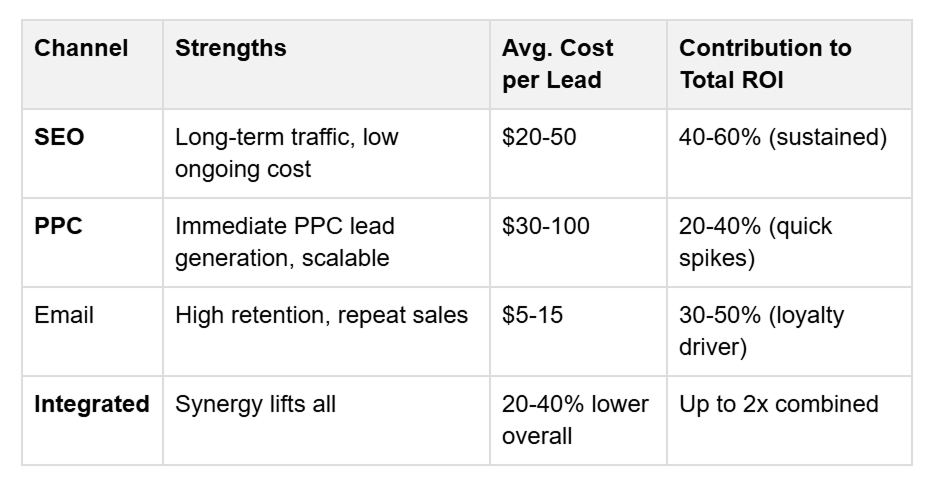
This table pulls from HubSpot data across 1,000+ campaigns. Notice how integrated marketing slashes costs while stacking gains? SEO warms up searches for PPC, and both feed email lists.
Real Tactics to Sync Your Channels
- Use SEO insights for PPC bids: Pull top-ranking keywords into ads for better Quality Scores and lower costs.
- Feed PPC traffic into email marketing funnels: Add opt-in forms on ad landing pages to capture 10-20% more leads.
- Remarkets via email: Segment SEO visitors who didn’t convert and hit them with tailored nurtures, boosting opens by 15%.
- Track social media growth cross-channel: Share SEO blog posts on Instagram, drive to PPC-style offers, then email follow-ups.
- Align messaging: If your SEO post covers “digital marketing strategy,” echo it in PPC ads and email subjects for brand consistency.
- Measure multi-channel ROI with UTM tags: Tools like Google Analytics attribute conversions accurately across touchpoints.
Common Pitfalls and Quick Fixes
Ignoring mobile? 60% of searches are mobile. Ensure SEO, PPC, and emails render perfectly on phones.
No tracking? Set up goals in Analytics for every funnel stage.
Over-relying on one channel? Balance spend: 40% SEO, 30% PPC, 20% email, 10% testing.
Budget too tight? Start small, $500/month per channel and scale winners.
Measuring Success Step by Step
- Set baselines: Current traffic, leads, revenue per channel.
- Tag everything: UTMs for SEO, PPC, emails.
- Run 30-day tests: Sync one tactic, like PPC to email.
- Analyse: Look at assisted conversions, where SEO helps PPC close.
- Adjust: Shift budget to top multi-channel ROI paths
Expect 15-30% gains in the first quarter if consistent.
Next Steps for Your Digital Marketing Strategy
Audit your current setup. List top SEO pages, PPC campaigns, and email lists. Find overlaps.
Test one integration this week, say, adding an email opt-in to a PPC page.
Track for 60 days. Tweak based on data.
This integrated marketing isn’t a fancy theory. It’s what turns scattered efforts into a lead machine.
Conclusion
Integrated digital marketing is about more than running SEO, PPC, and email separately, it’s about creating a seamless ecosystem where each channel amplifies the others. By syncing strategies, tracking multi-channel ROI, and nurturing leads across touchpoints, businesses convert more traffic into loyal customers.
When done right, integrated marketing not only drives faster results but builds sustainable growth, ensuring every click, open, and visit contributes to measurable, long-term success.