


Future of Business Leadership: Scale Tech Agencies with Strategic Growth Tips
Running a tech agency today means staring down constant change. AI tools pop up weekly, clients demand faster results, and markets shift overnight.
The future of business leadership isn’t about chasing every trend, it’s about picking the right ones to build something that lasts. I’ve seen agencies crumble because leaders ignored the basics while obsessing over shiny tech. Others thrived by focusing on strategic growth.
Let’s break it down with lessons from the front lines.
Why Tech Agencies Need a Reality Check on Growth
Most tech agencies start small: a few developers, some marketing gigs, maybe a niche in web apps. Then growth hits. You hire fast, take on big clients, and suddenly operations buckle. Scaling tech agencies fails here because leaders treat growth like a sprint, not a marathon.
Think about it. In 2023, over 60% of tech firms with under 50 employees reported scaling pains, per a Clutch survey. Revenue jumps, but profits flatline. Why? Poor planning. Visionary leadership steps in by mapping growth stages early.
Key Stages of Strategic Growth
Here’s a simple table showing how agencies typically scale and where they trip up:
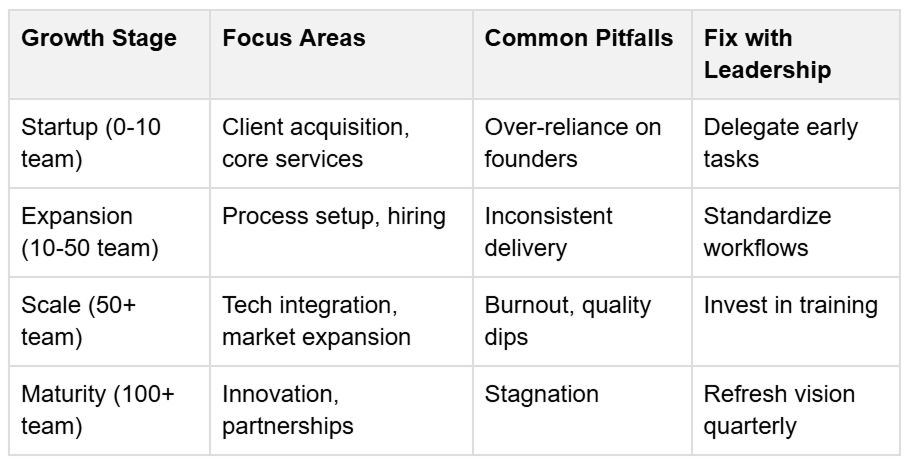
Strategic growth means aligning hires, tools, and goals. One agency I advised cut churn by 30% just by auditing their pipeline against this framework.
Tech Adoption: Pick Winners, Not Fads
Tech adoption sounds simple, buy the latest SaaS, roll it out, done. Wrong. Leaders who future-proof pick tools that solve real bottlenecks. Remember when everyone piled into NFTs? Most agencies wasted cash. Smart ones stuck to proven stacks like cloud infra and automation.
Start with your pain points. Slow client reporting? Tools like Tableau or Google Data Studio fix that without a full overhaul. Need better project tracking? Asana or ClickUp scales with you.
Real-World Tech Stack for Agencies
- Core ops: Notion for docs, Slack for comms, keeps teams aligned without email hell.
- Client delivery: Figma for design handoffs, GitHub for code, cuts revisions by half.
- Growth boosters: HubSpot for leads, Zapier for automations, frees 10+ hours weekly per team member.
Operational efficiency jumps when you measure ROI. Track time saved vs. cost. One client agency adopted these and boosted billable hours from 65% to 85% in six months.
Visionary Leadership in Action
Visionary leadership isn’t speeches. It’s decisions that position you ahead. Take Satya Nadella at Microsoft, he shifted from Windows to cloud, turning a giant into a growth machine. Agencies can do the same.
Leaders set the tone by asking: “What does our business look like in 5 years?” Then back it with actions. For future of business leadership, that means quarterly reviews. Adjust based on data, not gut.
Building Operational Efficiency from the Ground Up
Efficiency isn’t sexy, but it’s the backbone of scaling tech agencies. Without it, growth eats you alive. Start with workflows. Map every client journey, from pitch to invoice. Spot delays, automate them.
Tools help, but people matter more. Train teams on lean methods. Agencies using OKRs (Objectives and Key Results) see 20-25% productivity gains, says Gartner.
One Bullet-Point Playbook for Efficiency Gains
- Audit current processes weekly; cut steps that add no value, like manual invoicing (switch to Stripe for 80% time savings).
- Cross-train staff across roles; reduces sick-day chaos and builds flexibility.
- Set KPIs like “project completion under 90 days” and review monthly; ties bonuses to results.
- Adopt no-meeting Wednesdays; protects deep work time, boosting output by 15-20%.
- Use dashboards (e.g., Google Sheets + Looker Studio) for real-time metrics; spots issues before they blow up.
Implement these, and operational efficiency becomes your edge. One logistics client I worked with slashed overhead by 18% in Q1.
Data-Driven Decisions for Long-Term Wins
Numbers don’t lie. Visionary leadership leans on them. Track metrics like CAC (Customer Acquisition Cost), LTV (Lifetime Value), and churn. If CAC exceeds LTV by 20%, pivot fast.
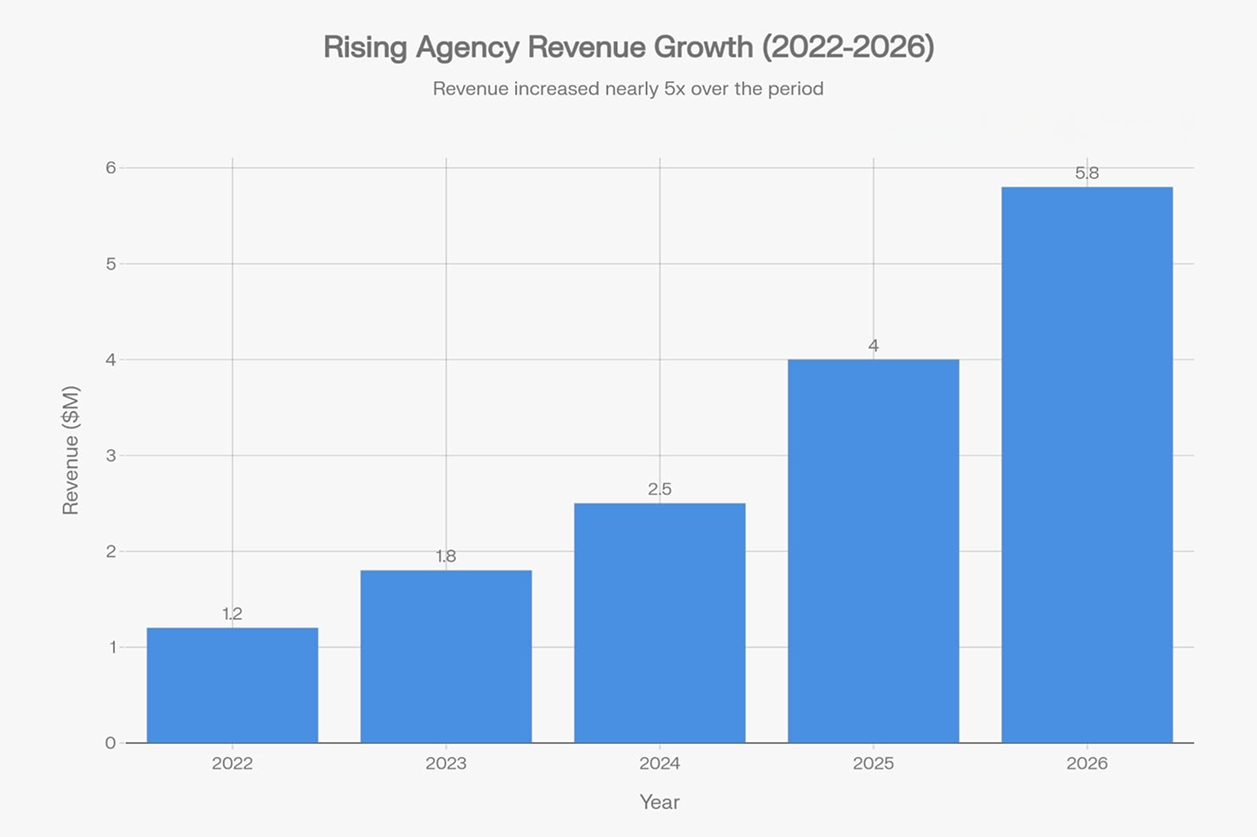
Visualise it like this chart, based on averaged agency data: revenue surges post-2024 tech adoption, while controlled spend drives strategic growth.
Agencies ignoring data stall. Those using it, like integrating CRM analytics, scale tech agencies smoothly.
Navigating Risks in Rapid Tech Shifts
Change brings pitfalls. Tech adoption can backfire if rushed. Cybersecurity threats rose 30% last year (per IBM). Leaders stress-test tools and train on basics.
Remote work? Great for operational efficiency, but watch burnout. Mandate off-days. One agency cut turnover 25% with “recharge Fridays.”
Regulations matter too. GDPR, Pakistan’s data laws, stay compliant to avoid fines that kill strategic growth.
Client-Centric Scaling: Keep Them Coming Back
The future of business leadership puts clients first. As you scale, personalise less? No. Use tech to scale care: automated check-ins via Intercom, custom dashboards.
Retain 80% of clients, and growth compounds. Share success stories. “We boosted their leads 3x”, that’s industry authority in action.
Final Thoughts on Sustained Momentum
Scaling tech agencies demands balance: bold vision, tight ops, smart tech. Leaders who master this own the future of business leadership. Track progress, adapt, repeat.
Conclusion
Future-proofing a tech agency isn’t about chasing every new tool it’s about strategic growth, operational efficiency, and visionary leadership. By aligning tech adoption with clear processes, data-driven decisions, and client-focused scaling, leaders turn volatility into opportunity.
The agencies that thrive are the ones that balance bold vision with disciplined execution, continuously adapt, and invest in both people and systems. That’s how the future of business leadership transforms challenges into long-term success.