

Cohesive Visual Identities: Building Trust Through Strategic Branding
Cohesive visual identities help businesses stand out and earn customer trust. When branding and positioning work together, companies create lasting impressions across all platforms.
What Makes Visual Brand Identity Work
Visual brand identity covers the look and feel of a brand, logos, colours, fonts, and images that appear everywhere from websites to business cards. It acts as the face of your business, making sure people recognise you instantly.
A strong visual brand identity builds familiarity. Think of how certain red and white swirls bring soft drinks to mind right away. That instant connection comes from careful brand strategy, where every visual choice ties back to what the brand stands for.
Consistency matters most. Without it, mixed messages confuse audiences and weaken trust. Cohesive aesthetics mean the same style shows up in emails, ads, and packaging, creating a unified picture.
Steps in Brand Strategy Development
Brand strategy starts with knowing your audience and goals. Map out who you serve, what problems you solve, and how you differ from competitors.
Next, define core values. These guide all decisions. For example, a logistics firm might pick bold blues for reliability and clean lines for efficiency.
Then layer in visual brand identity elements:
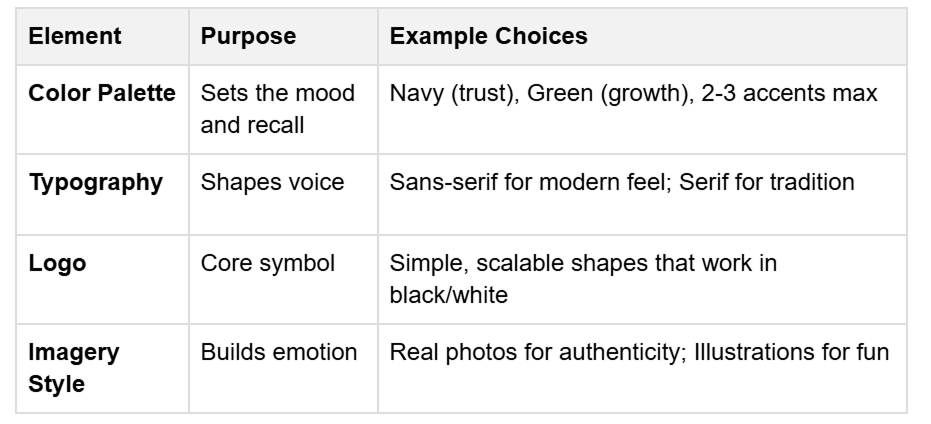
This table shows how to pick pieces that fit brand positioning. Limit options to avoid clutter, two fonts and four colours often do the job.
Role of Strategic Graphic Design
Strategic graphic design turns ideas into visuals that support brand positioning. Designers don’t just make things pretty; they plan layouts that guide the eye and reinforce messages.
Start with mood boards. Gather images, swatches, and sketches that match your brand strategy. This keeps everyone on the same page.
Tools like grids and spacing create cohesive aesthetics. For instance, equal margins across social posts and brochures make everything feel connected. Market authority grows when designs look professional and thoughtful.
Real-world tip: Test designs with small groups. Ask if they match the brand’s story. Adjust based on feedback before full rollout.
Achieving Cohesive Aesthetics Across Platforms
Cohesive aesthetics mean your Instagram grid matches your website footer. This unity builds subconscious trust, people feel they know you.
- Break it down by touchpoints:
- Social media: Square formats with consistent filters.
- Website: Responsive layouts that keep colors true on mobile.
- Print: High-res files with exact Pantone matches.
Create a style guide document. Include rules for logo sizes, colour codes (like HEX #007BFF), and photo edits. Share it with your team, freelancers, and printers.
Building Market Authority Through Branding
Market authority comes when branding and positioning make you the go-to choice. Customers pick familiar brands over unknowns 80% of the time.
Visual brand identity plays a big role. Consistent use over time creates top-of-mind awareness. Mozilla’s abstract shapes and vibrant pops signal innovation without words.
Position against competitors by owning a niche look. A real estate agency might use clean whites and gold accents for a premium feel, standing apart from busy competitor designs.
- Track progress with simple metrics:
- Brand recall surveys
- Social engagement rates.
- Website bounce rates pre/post refresh.
Key Benefits of Strong Visual Identities
Faster recognition: People spot your logo in crowded feeds.
- Higher trust: Uniform looks signal stability.
- Better conversions: Matching aesthetics reduce cart abandonment by 20-30% in tests.
- Easier teamwork: Clear guides cut design revisions.
These points show direct returns on brand strategy investment. One bullet section keeps it simple,no fluff.
Common Mistakes to Avoid
Many brands fail by overcomplicating. Too many colours (over 5) or fonts dilute impact. Stick to basics.
Skipping mobile checks leads to distorted logos. Always preview on phones, 60% of views happen there.
Forgetting updates. Refresh every 3-5 years to stay relevant, but keep core elements.
Ignoring culture. Colours mean different things globally, red signals luck in Asia, danger elsewhere.
Applying Brand Positioning Daily
Brand positioning lives in small choices. Train staff to use approved assets. Set up shared drives for files.
For social posts, create templates with locked colours. This saves time and keeps cohesive aesthetics intact.
In client work, like your real estate or HR projects, match visuals to audience expectations. Logistics brands need sturdy, bold designs; lifestyle ones favour soft curves.
Conclusion
A cohesive visual brand identity isn’t just about looking good, it’s about being instantly recognisable, building trust, and reinforcing your market position at every touchpoint. By aligning branding, positioning, and strategic design, businesses create a consistent, memorable presence that resonates with audiences and drives loyalty.
Invest in clear guidelines, thoughtful visuals, and ongoing refinement, and your brand won’t just stand out, it will become the brand people naturally turn to and trust.